
Important Information
The health and safety of the participants are of the utmost importance. The organizers are closely monitoring any specific travel advisories through official channels. Many governments, including Portuguese government, have enacted travel bans and are prohibiting large or even moderately sized public gatherings. Nonetheless, these bans on travel and public gatherings have been diminishing over time and are likely to be waived in number and scope in the coming weeks. Howbeit, before attending the workshop, we recommend that you stay informed of any information your local health agencies may make available and take reasonable precautions to protect yourself.
The following proactive steps are being taken to maintain a safe and healthy environment at the CORE workshop:
- Adopt the regional jurisdiction guidelines and rules in maintaining a safe environment for all participants. National guidelines are located and updated here.
- The venue will be at Ingeniarius headquarters, in Alfena (Porto), so the organizing committee will actively ensure there are sufficient medical processes in place and sanitation products readily available.
- Every participant will have to conduct a 10-minute COVID-19 test on site at the cost of 5€ - only negatively tested participants will be able to physically attend the programme.
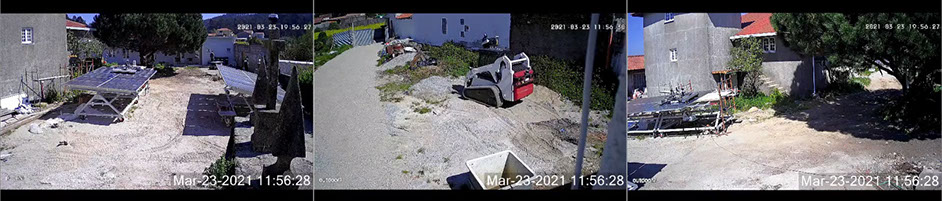
- We will provide access to the infrastructure cameras’ feed so that participants can follow the presentations and demonstrations remotely through a dedicated channel. The following Zoom link will be used: Zoom Meeting.
Summary
The CORE project proposes to rethink how engineering and technology should be adopted under different domains using a multidisciplinary approach that goes beyond the purely technical viewpoint. CORE, co-funded by the P2020 programme (CENTRO-01-0247-FEDER-037082) has been the stepping-stone in establishing the Centre of Operations for Rethinking Engineering as Ingeniarius' R&D centre, integrating experts from both University of Coimbra and the Polytechnic Institute of Coimbra.
CORE echoes the key element of innovation and research promoted by this academia-Industry consortium, pouring into disruptive proofs-of-concept, which aims for the industrial and commercial exploitation of knowledge associated with new technologies, with particular focus on Intelligent Systems and Robotics and Sports Engineering and Health Technologies.
In this workshop, we will present the project results by bringing together several researchers, academics and entrepreneurs to assist in the exchange of knowledge and ideas. Participants will have the opportunity to attend several talks on the aforementioned domains, emphasizing artificial perception in field robotics, multi-robot cooperation in aquatic environments, mathematical modelling and wearable technologies for sports, and the development of serious games for education and rehabilitation. Furthermore, the workshop will showcase the several demonstrators developed in each of these domains, providing participants with the opportunity to interact first-hand with the prototypes established in the CORE project.
Motivation
Despite Portugal’s technological growth, it still falls short on the scientific advances promoted worldwide. According to the innovation report submitted by the European Commission, Portugal was, in 2009, one of the four countries in the EU where the number of scientific publications had the highest growth (13.9%) and one of the four with the most citations as well (16.9%). This evidence is further corroborated by the report on research, innovation and performance in Portugal, launched by the European Commission in 2014, which highlights Portugal as an European reference in terms of increased investment in R&D with a remarkable annual growth of 7% between 2000 and 2007. However, this report also reveals that the number of Portuguese patents falls short when compared to the average of EU countries, implying that the transfer of technology and knowledge to the market remains frail, thus weakening the competitiveness of Portuguese companies in the international market. In other words, although there is an exemplary effort in training young researchers in Portugal, the country remains below the EU average in terms of technological development, the number of companies devoted to R&D and the relevance of science and technology in the national economy.
The CORE project has been established by Ingeniarius, University of Coimbra and the Polytechnic Institute of Coimbra as a collaborative R&D structure, in the form of joint R&D centre, comprising experts from both industry and academia. This R&D centre intends to foster the creation of more effective and enduring links between these entities, identifying joint challenges tackled through a series of several proof of concepts duly validated, contemplating disruptive and creative technological development, while valuing the creation of shared resource structures for knowledge sharing.
Besides the R&D teams from Ingeniarius, CORE integrates researchers from the Institute of Systems and Robotics (ISR) and the Centre for Research on Sport and Physical Activity (CIDAF) from University of Coimbra, as well as the RoboCorp Laboratory from the Institute of Applied Research (RC) of the Polytechnic Institute of Coimbra. All these efforts have been put together to contribute to two domains, subdivided into four activities:
Intelligent Systems and Robotics
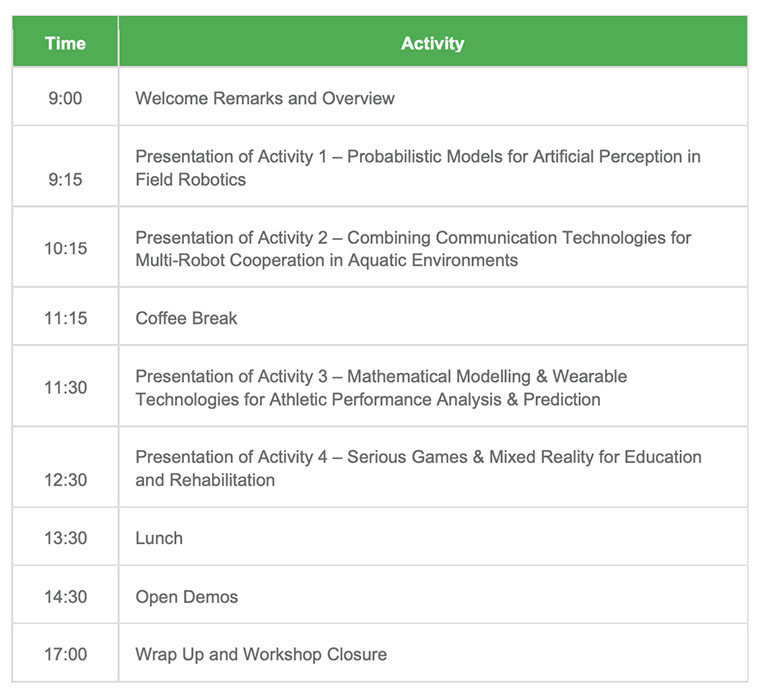
Activity 1. Probabilistic Models for Artificial Perception in Field Robotics
This activity focuses on perception techniques for field robots, namely MoDSeM. MoDSeM is a software framework for spatial perception supporting teams of robots, aiming to create a semantic map able to represent all spatial information perceived by teams of field robots. Preliminary experiments took place in a 100x100x100m simulated map to demonstrate our prototype’s ability to receive, store and retrieve spatial information. Results show promising performance in all aspects of the task, supporting future developments.
Activity 2. Combining Communication Technologies for Multi-Robot Cooperation in Aquatic Environments
This activity focuses in aquatic robotic technologies, mainly in multi-robot systems cooperation for several applications, such as water quality monitoring, mapping and localization, underwater infrastructure surveys. Progress has been made in multi-robot motion coordination, emphasizing on the use of a self-organizing map (SOM) to plan the motion of multiple unmanned surface vehicles while keeping them in an optimal formation for localization estimation of underwater vehicles.
Sports Engineering and Health Technologies
Activity 3. Mathematical Modelling & Wearable Technologies for Athletic Performance Analysis & Prediction
This activity focuses on wearable technologies for football as a promising field in scientific, technological, and economic aspects. This research deals with different approaches from several perspectives. On a first instance, it deals with the development of these technological solutions at both hardware and software levels. At the high-level, this activity describes several artificial intelligence approaches to extract and identify patterns of sports performance, which may not only be key in forecasting sports outcomes, but also in preventing injuries.
Activity 4. Serious Games & Mixed Reality for Education and Rehabilitation
This activity intends to demonstrate the feasibility and technological prospect of serious games and mixed reality for future scientific aspects, mainly exploring mixed reality technologies. This activity presents two videogame demos which showcase the use of these technologies in both education and rehabilitation domains.
Venue
The CORE Workshop takes place at Ingeniarius’ headquarters, in the city of Alfena, which belongs to Valongo; one of the municipalities of Porto.
Porto, also known as Oporto, is located in the North Region of Portugal, situated near the sea along the river Douro. Porto spread out over the hills overlooking the river, creating an exceptional urban landscape that bears witness to a history of two millennia. Its continuous growth can be read in the profusion of the monuments that live there, from the Cathedral and its Romanesque apse to the neoclassical Santa Clara church of Manueline style. Porto is a UNESCO World Heritage site surrounded by 16 other municipalities that combine a unique range of assets. As a city on the rise, Porto tempts travellers with its vibrant cultural life, its world–class university, its unique city center and its excellent wine bars.
As Portugal’s second-largest city, Porto has an innovative profile and the tradition of undertaking its own initiatives, promoting significant economic, health, and environmental benefits for its inhabitants. The abundance of natural streams of water, forests, arable land and the long coast line makes Porto as one of Portugal's richest regions. The city of Porto has an international airport known as the Francisco Sá Carneiro Airport.
The city of Porto gave the name to Portugal (Portucale) and to the world-famous wine that goes by the same name. It is often referred to as "Cidade das Pontes" (City of the Bridges), "Cidade Invicta" (Unconquered/ Invincible City) and "Capital do Norte" (Capital of the North).
Consortium


Workshop Registration
Contact Information
Address
Rua Nossa Senhora da Conceição 146
4445-147 Alfena
Phone
+351 961 171 409
core@ingeniarius.pt
Ingeniarius, Lda